
The Vote Itself Is the Admission
When a Communist Party convenes an emergency economic session and votes to open the economy to market mechanisms, the ideological architecture of seven decades does not simply bend — it fractures. Cuba’s Communist Party did exactly that this week, approving a package of liberalization measures described by state media as unprecedented. The word is accurate. No comparable action has occurred since the revolution consolidated power in 1959.
The package’s details are still emerging, but the structural signal is unambiguous: the Cuban state can no longer provision its population through the mechanisms it has defended as sovereign and socialist for over six decades. This is not a reform. It is a controlled admission of systemic failure.
What the Party Actually Approved
The emergency economic package authorizes expanded private enterprise, broader foreign investment access, and — critically — a loosening of state monopoly controls over key sectors including agriculture and retail distribution. These are not cosmetic adjustments. They represent the formal abandonment of the command-economy model in the sectors where Cubans experience scarcity most directly: food, fuel, and basic goods.
The framing from Havana positions the move as a proactive response to external pressure rather than internal collapse. That framing does not survive contact with the data. Cuba has experienced consecutive years of GDP contraction, rolling electrical blackouts lasting up to 20 hours per day in some provinces, and emigration flows not seen since the Mariel boatlift of 1980. The U.S. pressure campaign — tightened sanctions, remittance restrictions, and the reimposition of Cuba on the State Sponsors of Terrorism list — accelerated the timeline but did not manufacture the crisis. The structural contradictions were pre-existing.
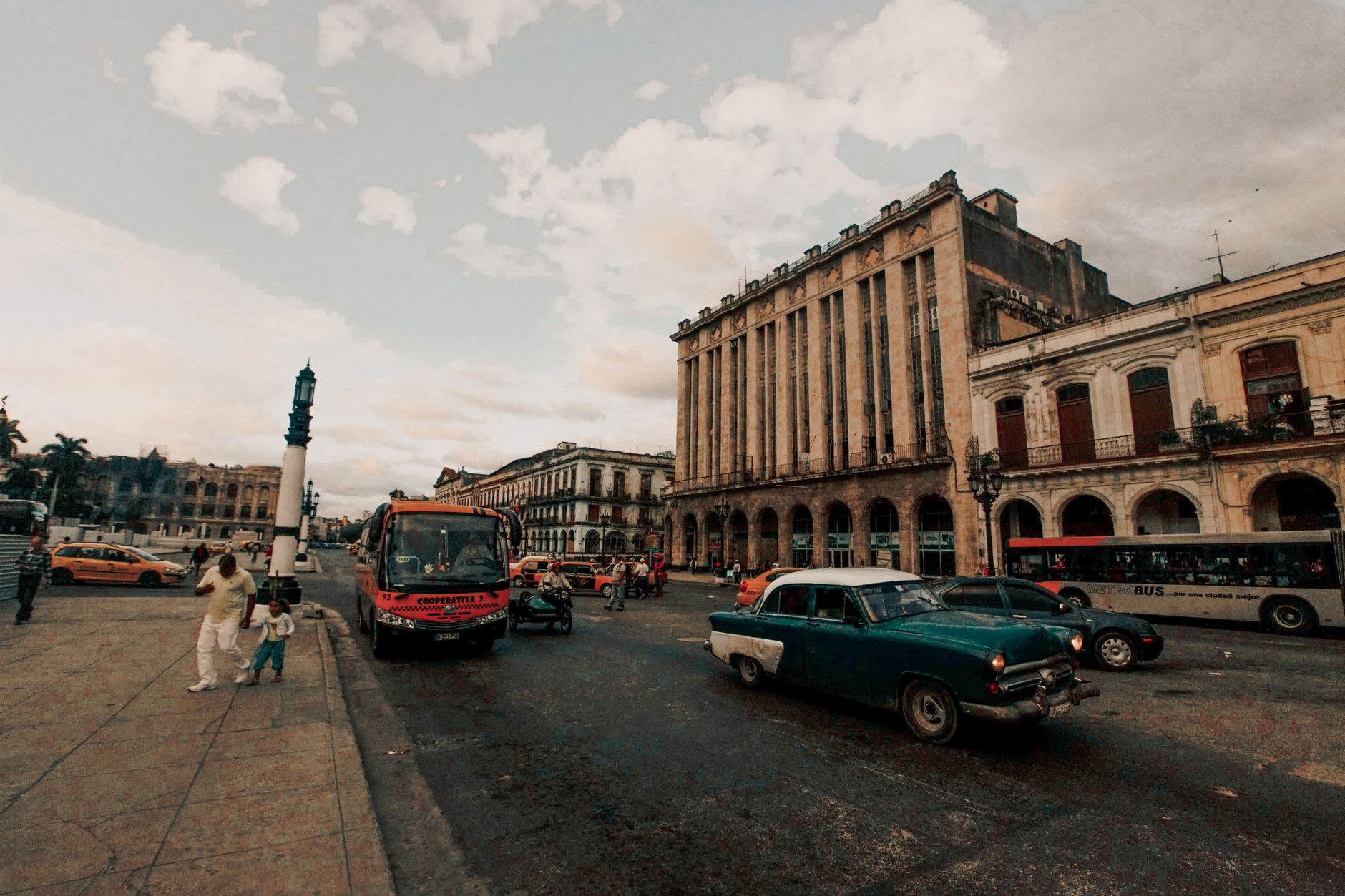
Cuba's capital has endured fuel shortages, rolling blackouts, and food scarcity as the state-run economic model reached systemic failure.
Mehmet Turgut Kirkgoz / PexelsThe Structural Logic of Collapse
Cuba’s economy was never self-sufficient. It survived the Cold War era through Soviet subsidization estimated at $4–6 billion annually. When the Soviet Union dissolved, Cuba entered the “Special Period” — a euphemism for a famine-adjacent collapse that killed between 30,000 and 100,000 people depending on methodology. Venezuela’s Bolivarian petrodollars replaced Soviet transfers from the early 2000s onward, providing subsidized oil that Cuba resold on international markets for hard currency.
Venezuela’s own economic implosion under Maduro severed that lifeline. The COVID-19 pandemic eliminated tourism revenues — historically one of the island’s primary hard-currency sources. What remained was a state apparatus attempting to manage an economy it could no longer fund, using price controls that created shortages, a dual-currency system that destroyed purchasing power, and rationing infrastructure built for a different century.
The current opening is structurally analogous to what the Soviet bloc’s reformers attempted in the late 1980s: liberalization not as ideological evolution but as crisis management. The outcomes of those attempts are instructive.
Cuba GDP Growth Rate (%), 2018–2025
U.S. Pressure as Accelerant, Not Cause
Washington has been explicit about the strategic objective. The reimposition of Cuba on the terrorism sponsor list, the closure of remittance channels, and the aggressive enforcement of Helms-Burton Title III — which allows U.S. nationals to sue foreign companies doing business with confiscated Cuban properties — were designed to eliminate Cuba’s access to international capital markets and foreign investment. The Biden administration modestly relaxed some restrictions; the current administration reversed those reversals and tightened the vise further.
The strategy worked as an accelerant. It compressed a decade of slow-motion fiscal deterioration into three or four years of acute crisis. But the underlying system was already generating the conditions for this outcome. The sanctions provided Havana with a durable external explanation for failures that were, in significant part, endogenous.
The party’s decision to open the economy now — rather than pursue the conventional posture of ideological entrenchment — suggests that internal assessments of the situation have crossed a threshold. When a revolutionary vanguard party concedes market necessity in an emergency session, the internal picture is worse than the external one.
What Comes After the Opening
The historical record on rapid liberalization of command economies under duress is not encouraging. Price liberalization without corresponding institutional capacity generates inflation that destroys the savings of the most vulnerable. Foreign investment access without rule-of-law infrastructure produces enclave economies that benefit external actors and a narrow domestic elite while leaving the general population behind. Private enterprise authorization without access to credit, supply chains, or legal certainty produces informal markets that the state cannot tax and therefore cannot use to rebuild fiscal capacity.
Cuba also faces a demographic crisis that economic opening cannot address quickly. The emigration wave of the past four years has removed precisely the working-age population that any recovery requires. Estimates of departures since 2021 exceed half a million people — out of a total population of approximately eleven million. Those people are not coming back on the basis of a party resolution.
The Communist Party of Cuba has voted itself into a structural paradox: it has acknowledged the failure of the model it exists to defend, without possessing the institutional capacity to manage the transition away from it. What it approved this week is not a solution. It is the formal documentation of a system that has run out of alternatives.