
The Threat Is No Longer Implicit
Pete Hegseth stood before NATO defense ministers in Brussels on June 18 and delivered what amounts to a structural ultimatum: countries spending the least on defense will face reductions in US troop presence. The review of American military positioning across Europe, announced at the meeting, is not a future contingency. It is a current administrative process.
This is not rhetorical escalation in the tradition of Trump-era complaints about burden-sharing. This is a defense secretary announcing a formal review with troop numbers as the lever. The mechanism for dissolving the post-Cold War security architecture is now operational.
The Airbase Shame Ledger
Hegseth did not confine his address to spending percentages. He specifically named, as shameful, those NATO members who refused to allow US jets to use their airbases during the spring 2026 bombing campaign against Iran. That detail reframes the meeting entirely.
The Iran strikes were not a NATO operation. They were a unilateral US campaign. When allied governments declined to host those missions, they were exercising sovereign discretion over whether their territory would be used in a war they had not endorsed. Hegseth’s framing — that this constitutes a form of betrayal warranting punishment — treats NATO infrastructure as unconditionally available for US offensive operations outside the alliance’s formal mandate. That position has no basis in the NATO treaty. It does, however, have a certain structural logic: if the US provides the security guarantee, it expects operational compliance in return.
The countries that declined to cooperate now know that their base-access decisions will be factored into troop-level calculations. That is a new conditionality.
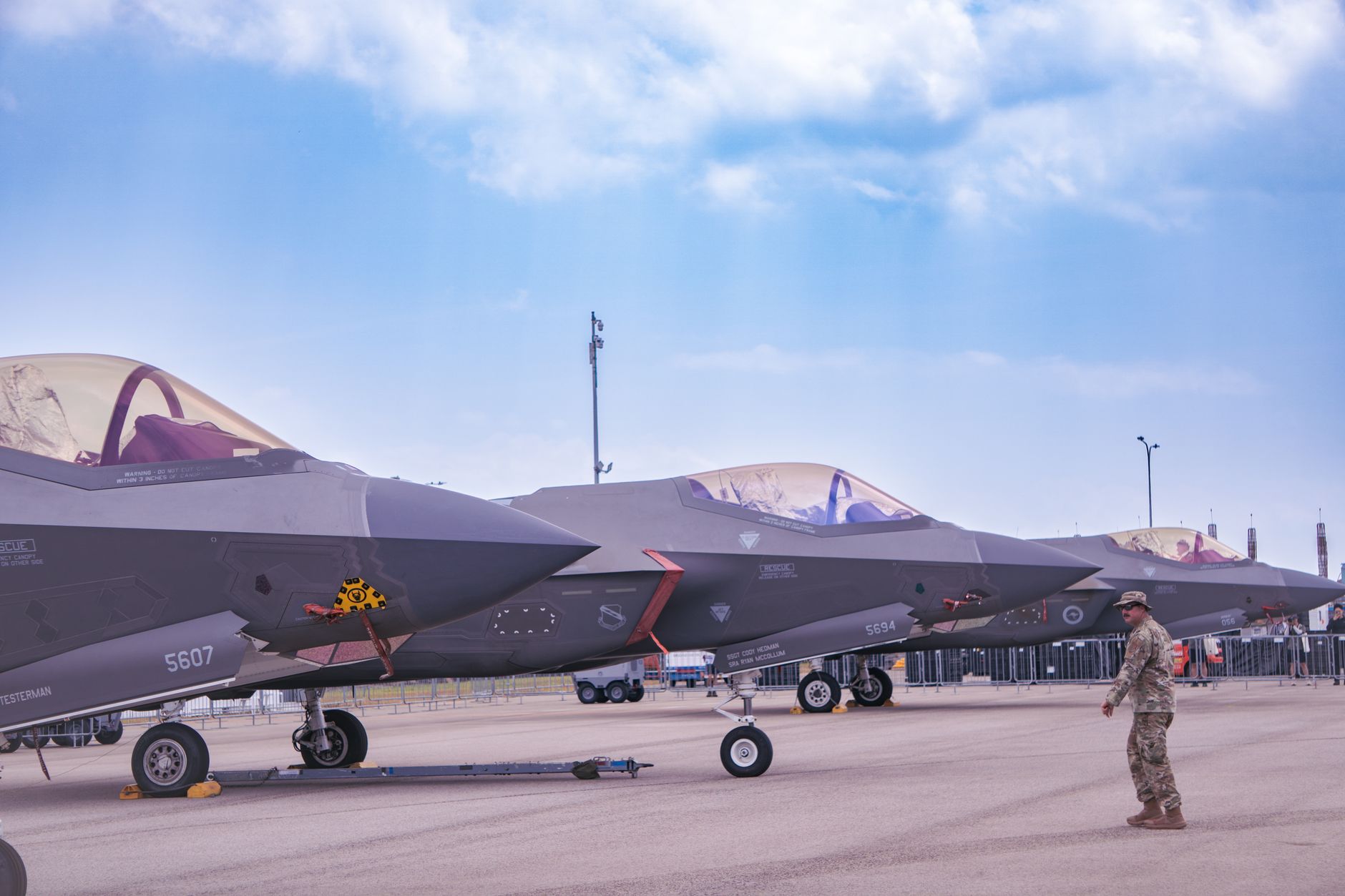
Several NATO member states refused access to their airbases for US jets conducting strikes on Iran in spring 2026, a refusal Hegseth explicitly named as shameful.
Thang Cao / PexelsWhat a Troop Withdrawal Would Actually Mean
The United States currently stations roughly 100,000 troops across Europe, a number that surged after Russia’s 2022 invasion of Ukraine. Germany alone hosts approximately 35,000. Poland, Italy, Romania, and Spain carry significant presences. These are not symbolic deployments. They are forward logistics, command infrastructure, and deterrence architecture.
A reduction calibrated to spending levels would not be uniform. The countries most likely to face cuts are those in Western Europe — Germany, Belgium, Luxembourg — which have historically underinvested in defense relative to GDP. The countries least likely to face cuts are those on NATO’s eastern flank — Poland, Romania, the Baltic states — which have consistently met or exceeded the 2% GDP target and which host US assets most directly relevant to Russian deterrence.
The practical effect is a westward hollowing of NATO’s continental presence. The political effect is the transformation of the alliance from a collective security structure into a transactional arrangement governed by bilateral compliance metrics.
Estimated US Troop Presence by Region in Europe
The 2% Target as Governance Instrument
The 2% of GDP defense spending target was agreed at the 2014 Wales Summit as a non-binding political commitment. For over a decade, the US used it as a rhetorical bludgeon while European members treated it as an aspirational figure. The post-Ukraine surge in European defense budgets moved several members closer to compliance, but as of 2026, roughly 23 of 32 members remain below the threshold.
What Hegseth is doing is converting a political commitment into a compliance condition with material consequences. This is a governance shift, not merely a rhetorical one. The threshold now determines resource allocation, not just diplomatic standing.
There is an internal logic to this. The US defense establishment has argued for years that the free-rider problem structurally degrades the alliance’s credibility. But the instrument being used to correct it — unilateral withdrawal of forces — undermines the alliance’s coherence more rapidly than European underspending ever did.
The Structural Contradiction NATO Cannot Resolve
NATO was built on an asymmetry: American strategic depth subsidized European security in exchange for geographic positioning and political alignment. That bargain made sense in 1949, held together through the Cold War, and frayed slowly after 1991. What Hegseth is doing is not introducing a new contradiction — he is forcing the existing one into the open.
European members cannot quickly build the logistics, command infrastructure, and nuclear deterrence capacity that US presence provides. The US cannot credibly threaten withdrawal without destabilizing the eastern flank it is simultaneously trying to hold against Russian pressure. Both sides are trapped by the architecture they built. The Brussels meeting did not resolve that trap. It made it visible.