The Deal That Did Not Reopen the Strait
On June 17, the United States and Iran signed a memorandum of understanding. Markets reacted. Analysts issued cautious statements. Several vessels began moving toward the strait’s exit lanes the following day. The signal was clear: the crisis was entering a resolution phase.
The signal was wrong.
Intertanko, the independent trade body representing the world’s tanker owners, confirmed what operational reality already made plain: approximately 80 mines are positioned in the center of the Strait of Hormuz. Until those mines are located, mapped, and cleared — a process measured in weeks at minimum, potentially months — normal commercial shipping through the world’s most consequential maritime chokepoint will not resume. A diplomatic document has no mechanism for removing ordnance from international waters.
The Mine Problem Diplomacy Cannot Dissolve
The geography of the strait concentrates the problem. At its narrowest, the Strait of Hormuz is roughly 21 nautical miles wide, with navigable shipping lanes considerably narrower than that. The center of the strait — where the mines are concentrated — is the functional highway for very large crude carriers and liquefied natural gas tankers that cannot operate in shallower coastal margins.
An alternative routing through Omani territorial waters has been floated, and some smaller vessels have attempted it. The problem is structural: the Omani coastal route runs through water too shallow for deep-draft tankers, placing laden vessels at direct risk of grounding. The alternative is not a solution. It is a workaround available to a subset of vessels carrying a fraction of normal cargo volumes.
The phrase used by Intertanko is precise and unsparing: the center of the strait will remain closed for “some time.” That temporal vagueness carries enormous economic weight.

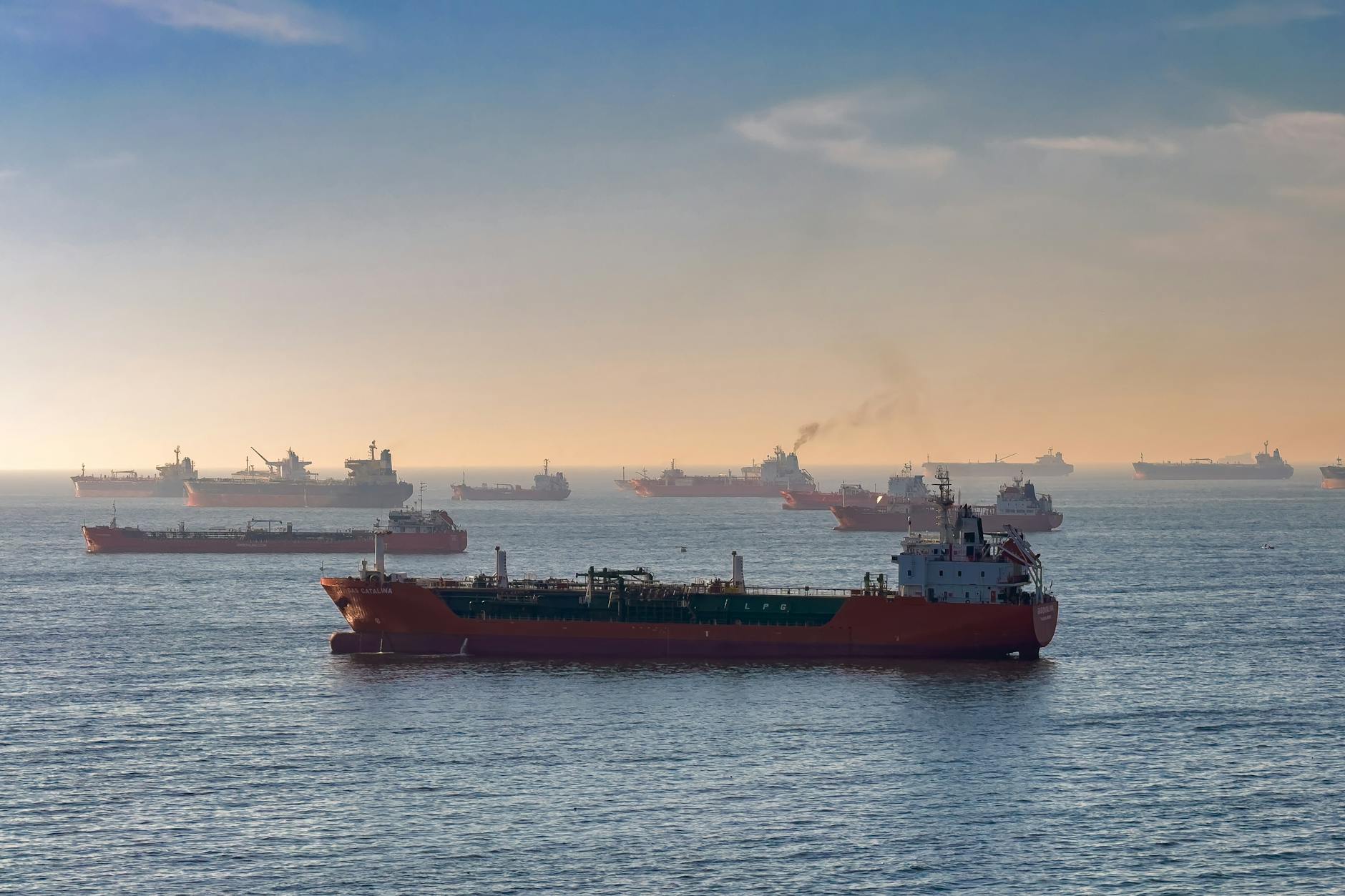
Vessels attempting to bypass the mined center of the strait via the Omani coastal route face shallow-water grounding risks that effectively neutralize the alternative.
Joerg Hartmann / PexelsWhat the Strait Controls
Approximately 21 million barrels of oil pass through the Strait of Hormuz daily in normal operating conditions. That figure represents roughly one-fifth of global petroleum consumption and a substantially higher share of seaborne oil trade. The strait is also the primary export corridor for liquefied natural gas from Qatar, the world’s largest LNG exporter. No combination of pipeline infrastructure, alternative routing, or strategic reserve releases can fully substitute for its function over an extended closure.
The closure period following mine deployment has already imposed costs on global energy markets, with freight rates and insurance premiums spiking across Gulf loading terminals. Every additional day the center lane remains impassable extends those costs and compounds the structural uncertainty facing refiners, utilities, and national reserve managers who had begun calculating when drawdowns could cease.
Daily Oil Flow Through Key Global Chokepoints (Million Barrels/Day)
Mine Clearance as a Sovereign and Logistical Puzzle
Underwater mine clearance is one of the most technically demanding operations in naval warfare. It requires specialized vessels — mine countermeasure ships equipped with sonar, remotely operated vehicles, and trained ordnance disposal personnel. No single navy deploys these assets in numbers adequate to clear 80 mines rapidly in open international waters. Coalition coordination, operating permissions, and intelligence on mine specifications all condition the timeline.
The question of which party bears responsibility for clearance is not yet resolved in public statements. Iran planted the mines as a strategic instrument during the confrontation with the United States. The MOU creates a diplomatic framework, but it does not assign liability or operational command for the remediation. The US Navy’s mine countermeasure capacity in the region is finite. Gulf state navies have limited specialist capability. The practical result is that clearance will proceed at the pace of whatever coalition can be assembled and authorized to operate.
The Structural Logic of the Crisis
What the Hormuz situation exposes is a recurring asymmetry in coercive strategy: the cost of deploying a weapon and the cost of neutralizing it are radically unequal. Iran seeded approximately 80 mines into a 21-mile strait. Removing them requires multinational naval operations, diplomatic clearance, and weeks of painstaking underwater work. The leverage exercised by the original act vastly outweighs the operational investment it required.
The MOU between Washington and Tehran addresses the political dimension of the confrontation. It does not address the physical dimension. Those two dimensions operate on different timelines and through different mechanisms. Until the mine clearance operation is complete, the Strait of Hormuz will function as a demonstration of exactly how cheaply a state can impose structural costs on the global economy — and exactly how expensive those costs are to reverse.