
A Unanimous Ruling in a Polarized Court
The Supreme Court of the United States ruled unanimously in favor of Ali Danial Hemani, a Texas marijuana user who challenged a state prohibition on firearm ownership by users of controlled substances. Nine justices agreed. In a court that has issued 5-4 and 6-3 decisions on nearly every contested question of the past decade, unanimity is not a procedural footnote — it is a signal about the state of the legal doctrine being applied.
The ruling does not represent a sudden consensus on gun policy. It represents the logical extension of a framework the court established in 2022 with New York State Rifle & Pistol Association v. Bruen, applied to a fact pattern that even the court’s more cautious members found unambiguous under that framework’s terms. The unanimity reflects doctrinal coherence, not ideological convergence.
The Bruen Architecture and Its Logical Endpoint
Bruen restructured Second Amendment jurisprudence around a single question: whether a challenged firearms regulation is consistent with the historical tradition of firearm regulation in the United States at the time of the Founding. The test discarded the interest-balancing approach that lower courts had used for decades. Under interest balancing, a government restriction could survive constitutional scrutiny if the state’s interest was sufficiently compelling. Under Bruen, history governs, not policy.
The practical consequence of that shift is that any restriction on firearm ownership must be traceable to analogous regulations from the 18th or early 19th century. The Texas statute prohibiting firearm possession by users of controlled substances has no direct historical analogue from that period — cannabis was not a regulated substance at the Founding, and the category of “controlled substance user” as a disqualifying condition for firearms ownership did not exist in American law until the 20th century.
Hemani’s legal team argued that Bruen’s framework left the Texas restriction without a historical foundation. All nine justices agreed with the structure of that argument. The ruling did not require anyone to endorse marijuana use or to express a preference about gun ownership. It required only that the court apply its own precedent consistently.
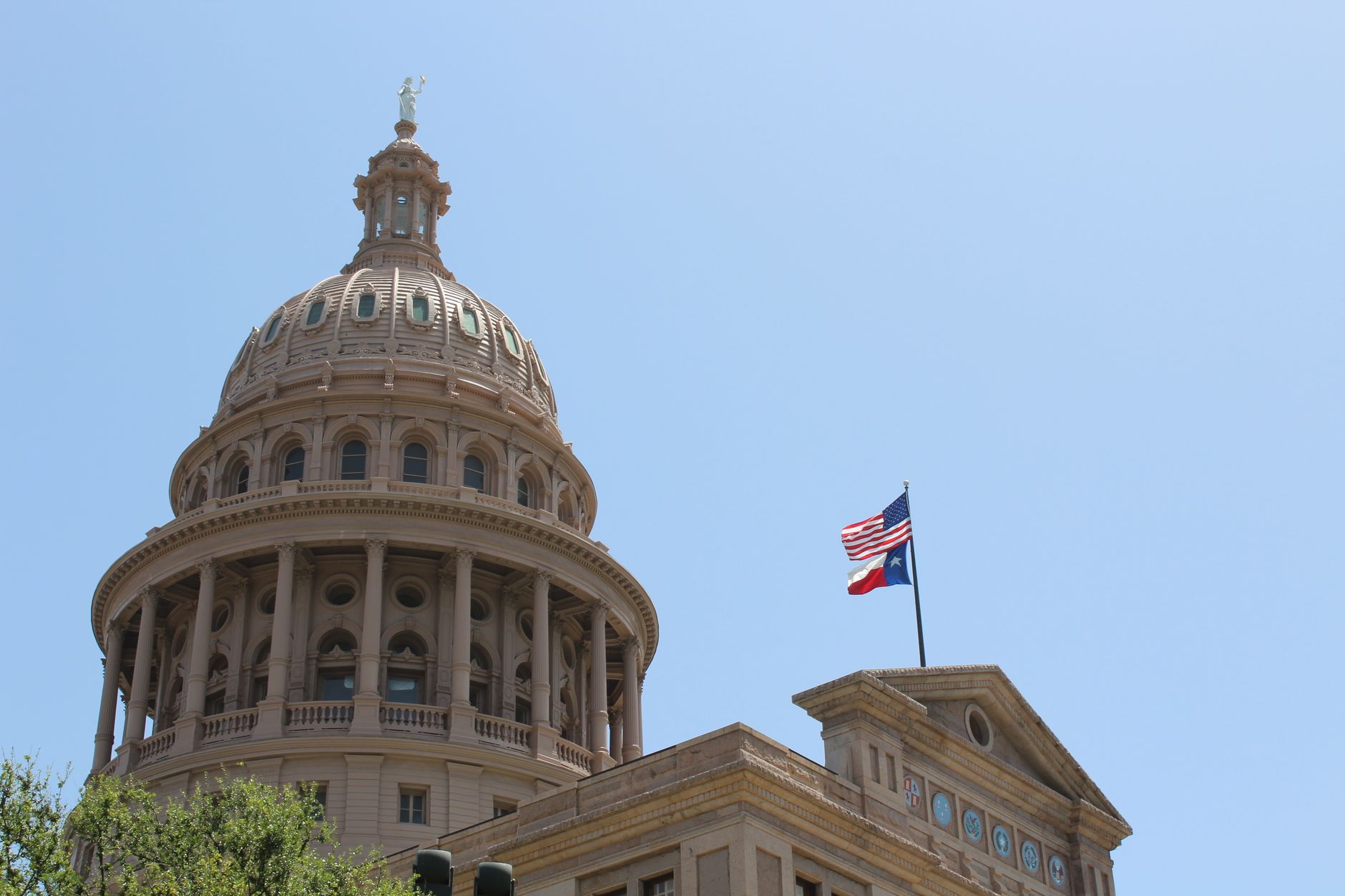
The Texas statute challenged by Ali Danial Hemani became the vehicle through which the Supreme Court extended its post-Bruen Second Amendment framework to users of substances legalized under state law.
Ruben Reyes / PexelsWhat Federal Law Now Confronts
The federal dimension of this ruling extends beyond Texas. Federal statute — specifically 18 U.S.C. § 922(g)(3) — prohibits any person who is “an unlawful user of or addicted to any controlled substance” from possessing firearms. Marijuana remains a Schedule I controlled substance under federal law regardless of state-level legalization. That federal prohibition now faces the same Bruen scrutiny that the Texas statute could not survive.
Thirty-eight states have enacted some form of marijuana legalization. In each of those states, a population of legally compliant state-law marijuana users exists in a condition of theoretical federal firearms prohibition. Before this ruling, the constitutional status of that prohibition was contested but unresolved at the Supreme Court level. The unanimous Hemani decision makes the federal statute’s vulnerability substantially more visible.
Congress has not updated the federal controlled substances schedule despite years of state-level legislative activity. The consequence is an expanding gap between the legal environments that millions of Americans actually inhabit and the federal regulatory framework that technically governs their conduct. The Supreme Court just inserted itself into that gap.
The Reach of Doctrinal Consistency
The ruling’s significance is not primarily about marijuana or firearms in isolation. It is about the mechanism by which the Bruen framework propagates through the legal system. Lower courts applying Bruen have already struck down restrictions on firearm possession by people subject to domestic violence restraining orders, by people convicted of non-violent felonies, and by people in several other statutory categories. Each of those rulings was contested, and some were subsequently narrowed by the Supreme Court itself.
The Hemani ruling’s unanimity removes the contestability from a specific application of Bruen that the court clearly regards as straightforward. It signals to lower courts that the framework is not to be applied selectively — that when historical analogy is absent, the restriction falls regardless of the policy arguments for it.
This is how constitutional doctrine expands: not through dramatic pronouncements but through the accumulation of unanimous applications to fact patterns that the court treats as obvious.
The Legislative Response That Has Not Come
Congress retains the authority to reschedule marijuana, which would change the legal landscape for the federal firearms prohibition entirely. It retains the authority to draft new firearms restrictions with explicit historical grounding designed to survive Bruen scrutiny. It has done neither with any consistency or urgency.
The result is a judiciary filling a space that the legislature has left vacant. The Supreme Court is not making gun policy in any normative sense. It is applying its own precedent to fact patterns that arrive because elected bodies have declined to resolve the underlying tensions through statute. Unanimous rulings in a polarized court are the byproduct of legislative abdication — not judicial activism. The distinction matters for understanding what comes next.