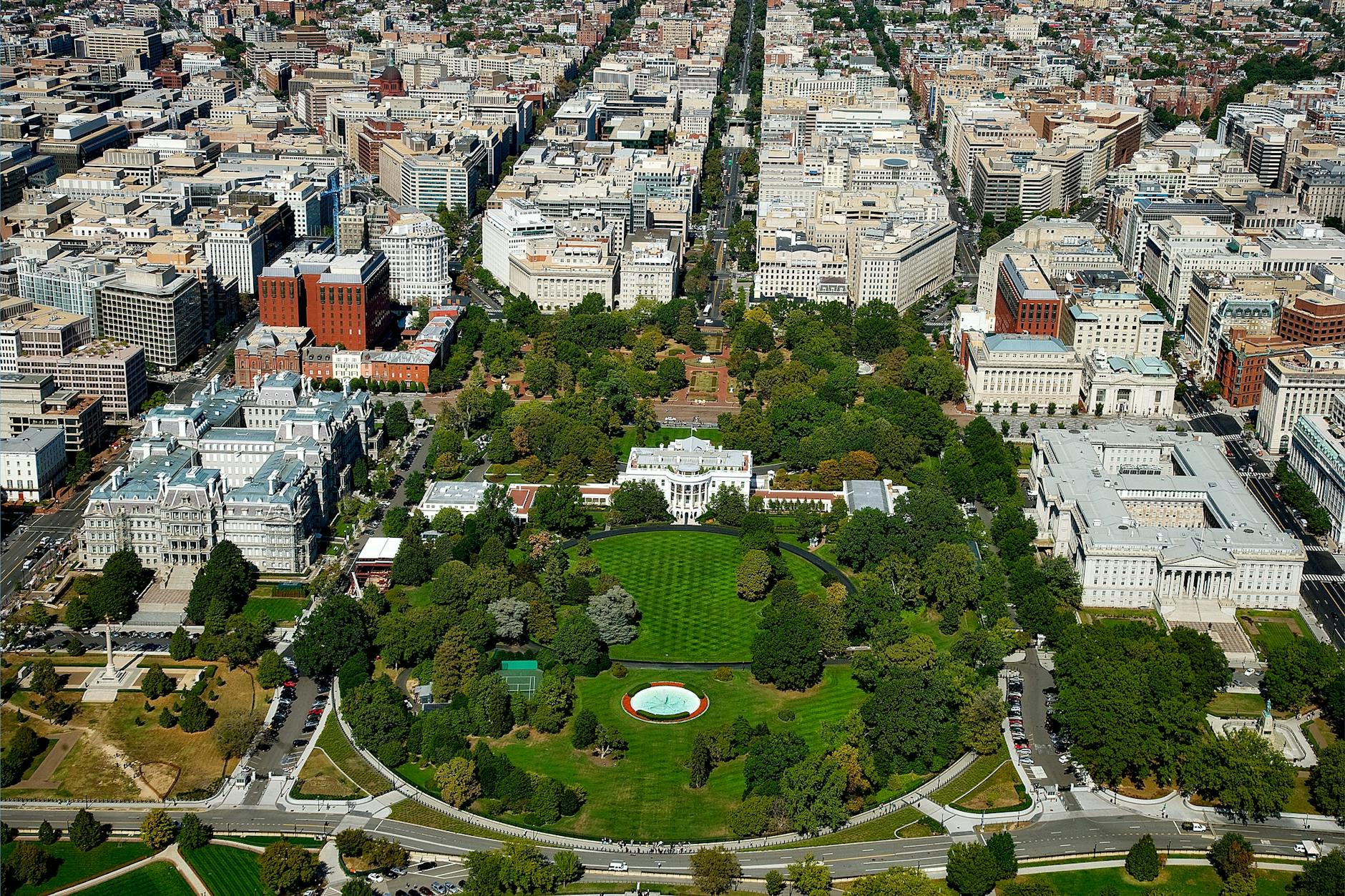
A Transfer Hidden in Plain Sight
The Trump administration has redirected $352 million in federal funds designated by law for Secret Service operations toward the construction of a White House ballroom — a project the president repeatedly promised would be financed entirely by private donations. The transfer was made without public announcement. No donor funding has materialized.
The mechanism is not obscure. The funds originate from the One Big Beautiful Bill Act, Trump’s signature legislative achievement passed in summer 2025 on an exclusively Republican vote. The law’s text is unambiguous: money allocated under it may be spent on Secret Service personnel, training facilities, technology, and directly related operational costs. Construction of presidential entertainment infrastructure is not among those permitted uses.
The Statutory Constraint
Statutory restrictions on appropriated funds exist precisely because Congress, not the executive branch, holds the constitutional power of the purse. When an administration redirects money in violation of the purpose for which it was appropriated, the act carries a specific legal name: impoundment, or in more severe cases, a violation of the Antideficiency Act. Neither carries automatic enforcement — which is the structural vulnerability this administration appears to be exploiting.
The One Big Beautiful Bill Act was sold to the public and to Republican legislators as a comprehensive fiscal and security package. Secret Service funding was included to address longstanding resource gaps in the agency’s protective operations. Diverting those resources to a ballroom does not merely redirect money — it degrades the operational capacity the legislation was designed to restore.

The One Big Beautiful Bill Act, passed on Republican-only votes, explicitly restricts Secret Service funds to personnel, training, and technology — not construction.
Mark Stebnicki / PexelsThe Promise of Private Funding
Trump made the private-funding commitment explicitly and repeatedly. The framing was consistent: the ballroom project would carry no cost to taxpayers. It would be financed by wealthy donors, by supporters, by the private wealth that Trump has long positioned as an alternative governance mechanism to public expenditure.
No such funding materialized. Rather than abandoning the project or scaling it to what private donations could support, the administration located a pool of federal money and moved it. The sequence — public promise of private funding, failure to secure it, quiet federal transfer — is a governance pattern, not an isolated incident.
Institutional Accountability Gaps
Congressional oversight of appropriations transfers depends on committees acting on referrals, on inspectors general filing reports, and ultimately on a legislative majority willing to treat violations as violations rather than as partisan disputes. The current Republican majority passed the bill. Holding the administration accountable for misusing it requires that same majority to discipline its own president — a mechanism that has shown no signs of activation.
The Government Accountability Office has authority to issue legal opinions on appropriations violations, but its findings are non-binding. The Office of Legal Counsel within the Justice Department, which might otherwise issue a constraining opinion, operates under executive authority. The structural feedback loops that would ordinarily check this kind of transfer are either weakened or entirely captured.
What the Pattern Reveals
The $352 million ballroom transfer is not primarily a story about one building. It is a demonstration of how statutory language becomes decorative when enforcement mechanisms are inoperative. The law said one thing. The administration did another. The gap between those two facts is where democratic accountability either functions or fails.
Legislation that cannot be enforced against the executive branch that signs it into law is not a constraint — it is a resource pool. The ballroom will be built. The Secret Service will operate with less than Congress allocated. And the legal text of the One Big Beautiful Bill Act will remain unchanged, its restrictions now established as non-binding against the administration it was designed to fund.