What Happened and Why the Sequence Matters
Erias Lukwago, a lawyer representing a defendant in a high-profile Ugandan treason case, has been arrested and charged with a related offense. The charge did not emerge from an independent prosecutorial review. It followed a public declaration by Uganda’s military chief that he intended to inflict “hurt and pain” on Lukwago. The sequence is the story.
When the commanding officer of a military apparatus announces punitive intent toward a civilian lawyer, and that lawyer is subsequently charged under military jurisdiction, the legal process has ceased to function as an adjudicative mechanism. It has become an instrument of enforcement — not of law, but of institutional power.
The Lawyer as Target
Legal representation in politically sensitive cases operates on a foundational assumption: that defense counsel cannot be prosecuted for the act of defending. This assumption is not merely ethical. It is structural. Without it, the state can neutralize any legal challenge to its conduct by charging the challenger. The defense bar becomes a liability rather than a safeguard.
Uganda’s military has now demonstrated that this assumption does not hold within its jurisdiction. Lukwago’s arrest converts defense representation itself into a chargeable association. Any lawyer who takes a politically sensitive case in Uganda now operates with the knowledge that the client’s legal jeopardy can become their own.
The chilling effect on the broader defense bar is the intended outcome. This is not a side effect of the prosecution — it is its primary purpose.
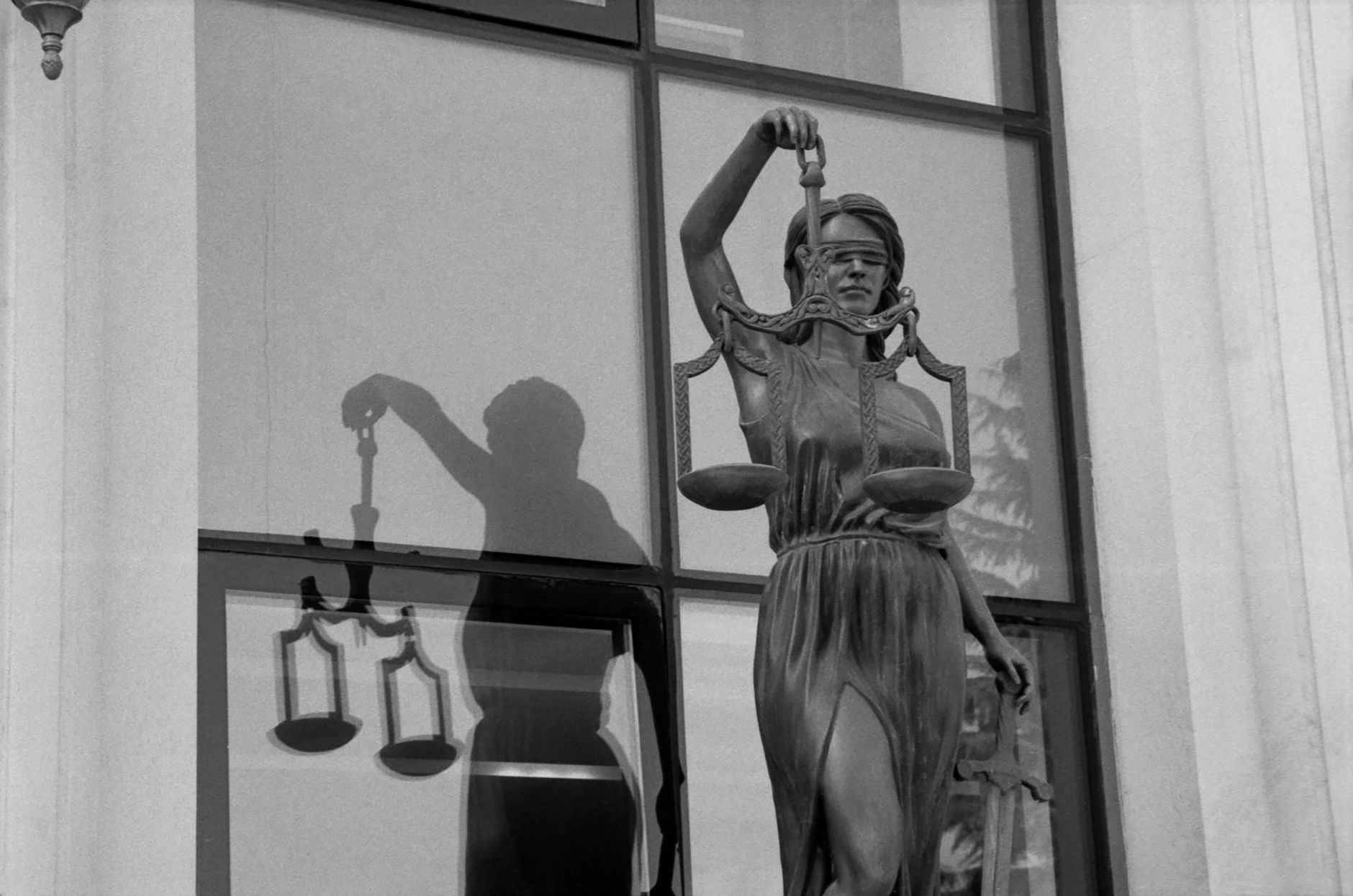
Uganda's legal and military institutions have converged in a case that removes the boundary between defense counsel and criminal suspect.
Sena Köse / PexelsMilitary Jurisdiction Over Civilian Cases
The framing of civilian political cases as military treason matters for institutional reasons that extend beyond Uganda. Military tribunals operate under different evidentiary standards, different procedural rights, and — critically — under a chain of command that answers to the executive. When civilian political opponents are processed through military legal architecture, the separation between political authority and judicial authority collapses.
Uganda is not unique in this pattern. The use of military courts to process civilian dissent has been documented across sub-Saharan Africa, including in Ethiopia, Egypt, and Cameroon. What distinguishes the Lukwago case is the degree to which the military command made its punitive intent explicit before the legal action was taken. The public statement by the military chief was not a lapse in discipline. It was a signal — to Lukwago, to other lawyers, and to the political opposition — that the military considers itself empowered to announce retribution and then execute it through nominally legal means.
Erias Lukwago and Uganda’s Political Opposition
Lukwago is not an obscure figure in Ugandan civic life. He has served as Lord Mayor of Kampala and has been a consistent voice in the country’s political opposition. His involvement in the treason case places him at the intersection of legal defense and political opposition — a position that the state has now defined as criminally actionable.
Presidential elections in Uganda are not distant. The Museveni government has managed political opposition through a combination of co-optation, legal harassment, and periodic detention for over three decades. The targeting of Lukwago fits within this pattern, but the use of his defense role as the legal pretext represents an escalation in the architecture of suppression. Previous targeting typically relied on separate allegations unconnected to legal practice.
The Institutional Logic of Weaponized Law
States that deploy legal instruments for political suppression do not typically do so without institutional scaffolding. Charges require courts. Courts require judges. Judges require tenure security or its absence. In environments where military jurisdiction extends over civilian political cases, that scaffolding is already in place.
The Lukwago prosecution is not an aberration from Uganda’s legal system. It is a product of the system operating as designed under current political conditions. The military chief’s public statement about “hurt and pain” was not a threat that preceded legal action — it was a description of how the legal action would function. The law, in this context, is the mechanism of harm delivery, not its constraint.
That distinction — between law as constraint on power and law as instrument of power — is the structural question that cases like this force into visibility. Uganda has answered it plainly.